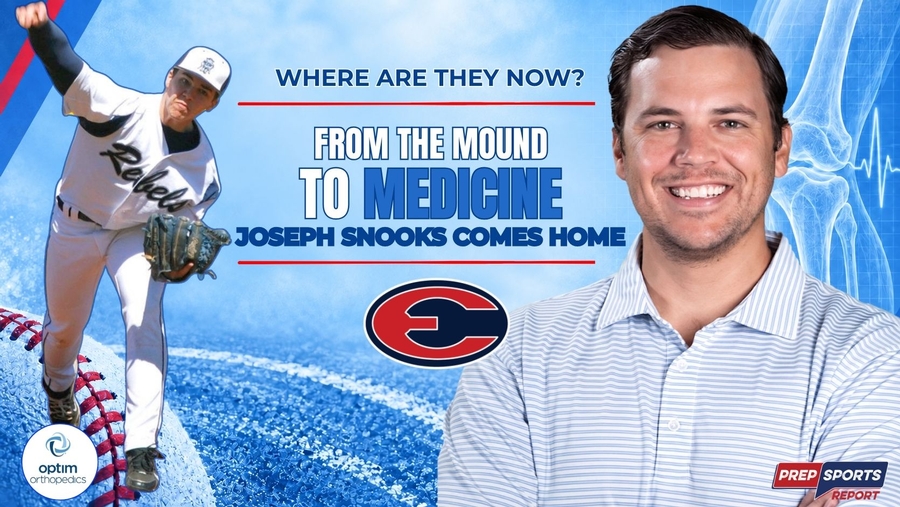
Joseph Snooks wanted the baseball back.
His elbow needed time.
During his first year at Armstrong Atlantic State University, the former Effingham County High School pitcher began experiencing elbow trouble. An MRI revealed a partial strain of his ulnar collateral ligament.
Snooks avoided surgery, but he could not avoid time away from the game.
“I was just fighting it, just rip roaring and ready to go,” Snooks said. “I thought I felt good, but I wasn’t 100 percent. My doctors knew that.”
Today, Snooks sits on the other side of that conversation.
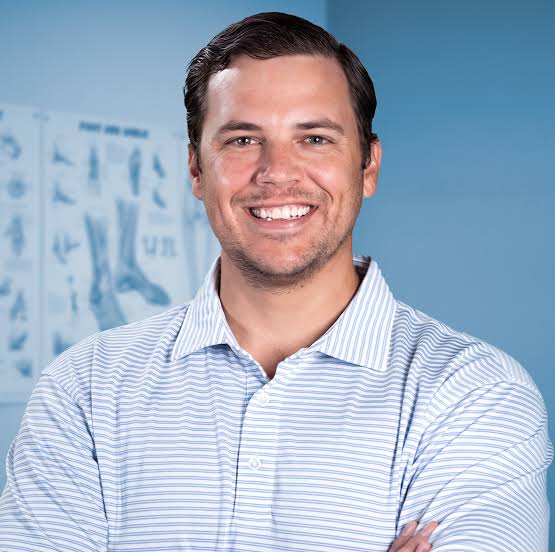
Dr. Joseph Snooks has returned home as a primary care sports medicine physician with Optim Orthopedics. He specializes in the nonoperative treatment of sports injuries and musculoskeletal conditions.
When an athlete wants to rush back, Snooks understands.
He has been that athlete.
“I can empathize with my patients when I see that,” he said. “Everybody wants to fast track injury recovery. We do have a lot of tools that have made us better at that, but there is no substitute for time and dedication to a structured treatment plan.”
His message to an injured athlete is clear.
“I want them to have many, many days of playing ahead,” Snooks said. “Not just a few more days or a few more weeks.”
That perspective followed Snooks from Effingham County to Armstrong, into the classroom, through medical school, and eventually to the sidelines at the University of Alabama.
Now, it has brought him back to the community where it all started.
“It’s everything,” Snooks said. “What I set out to do was always come back home.”
Growing up a Rebel
Sports were a major part of Snooks’ childhood in Effingham County.
He began playing baseball at an early age and credits a long list of youth, middle school, and high school coaches with teaching him lessons that reached far beyond the field.
“They were bigger than the game of baseball,” Snooks said. “It was about character, humility, playing the game the right way and life outside of baseball.”
At Effingham County, Snooks played for coaches Griffin and Huntley. Huntley later became one of his mentors when Snooks returned to the school as a teacher.
Snooks also grew up competing alongside family members, including cousins and his younger brother.
“My brother always helped keep me honest and keep me humble,” Snooks said.
Older players also showed him the way. Snooks specifically remembered Zach Dotson as one of the players who took him under his wing.
By Snooks’ senior season in 2010, the Rebels had a group that had been playing together for years. Justin Rogers, Josh Brant, Brandon Stevenson, Matthew Rahn, Jeremy Edwards, and Snooks formed part of a senior class that grew up with one goal.
“We had been together since we were 12 years old,” Snooks said. “That was always our dream, competing at that level.”
The Rebels reached the Class AAAA state playoffs, and Snooks earned a spot on the Region 2-AAAA all-region team. He graduated from Effingham County High School in 2010.
The season also changed the direction of his baseball career.
Snooks had spent much of his career as a middle infielder and utility player. He did not begin pitching until his junior year.
Pitching became the position that took him to college.
“I didn’t start pitching until my junior year of high school, and that’s what I ended up being recruited to do at the collegiate level,” he said.
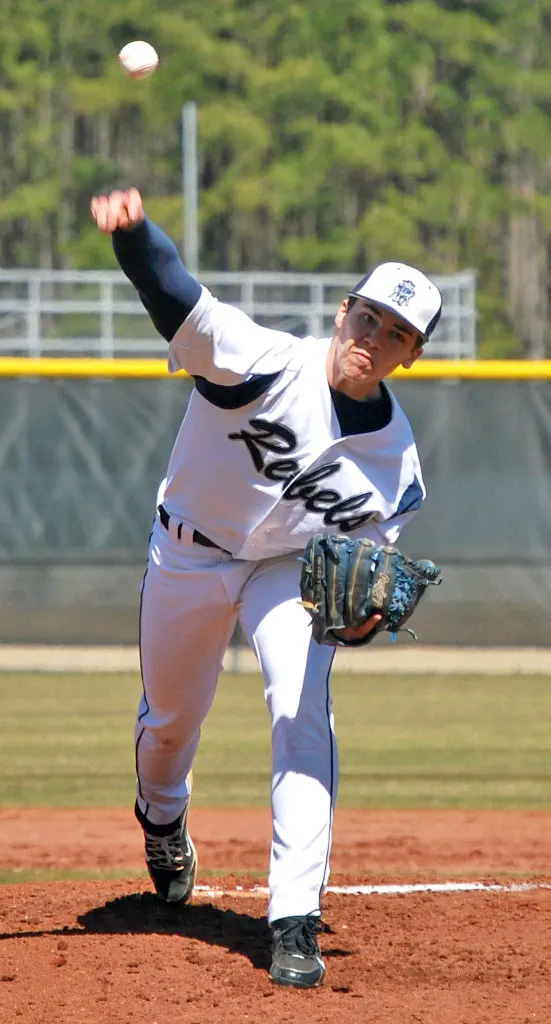
Effingham County senior Joseph Snooks delivers a pitch during the 2010 baseball season. (Photo courtesy of the Savannah Morning News archives)
College coaches and scouts were watching, but Snooks and his teammates knew their final season together meant more than individual opportunities.
“We were eventually going to go our separate ways,” he said. “We knew that senior year was special because there had been so many years put into building up to it.”
An injury changed his view.
Snooks remained close to home and continued his career at Armstrong.
After that came the elbow injury.
For the first time, baseball was taken away from him. He underwent an MRI, worked through physical therapy, and spent time on the sideline.
“It’s a humbling process to be sidelined and feel like you have absolutely no control,” Snooks said.
The physical injury was only one part.
Snooks learned how difficult it can be for athletes when the sport they love becomes part of their identity.
“There is a lot of mental struggle that goes with that, especially for people where competing is really their identity,” he said. “That’s not just at the collegiate level. That goes down to middle and high school athletes.”
Snooks had made it through high school without a major injury, but he had watched teammates experience serious setbacks. His own time away from baseball gave him another view.
“That started to spark my interest in the medical field as it pertained to the sports world,” he said.
Returning as a teacher
Before going to medical school, Snooks returned to Effingham County High School as a science teacher.
He was back in the same hallways and classrooms, but this time he waited at the front of the room.
Many of the teachers who previously guided him became his colleagues and continued serving as mentors.
Another familiar face was in the building.
Snooks’ younger sister, who is seven years younger, was a senior during his year as a teacher.
“She didn’t enjoy seeing my face too much,” Snooks said with a laugh. “But she was a good sport about it.”
Snooks also helped coach the middle school baseball team with Johnny Coleman. It let him teach and coach on the same grounds where he grew up.
“There was a lot of pride that came with it,” he said. “It was also a humbling experience.”
That year in the classroom still shapes how Snooks practices medicine.
Teaching prepared him to explain complicated information in a way young athletes and their parents could understand. It also prepared him for difficult conversations about performance, behavior, injuries, and return-to-play decisions.
“I credit a huge part of my success and the skills I developed as a medical student and resident to my teaching and coaching experience,” Snooks said. “It taught me how to communicate and meet patients where they are.”
From Effingham County to Alabama
Snooks entered Mercer University School of Medicine immediately after his year of teaching.
He completed a combined residency in internal medicine and pediatrics through Prisma Health and the University of South Carolina School of Medicine Greenville. He then completed a Primary Care Sports Medicine Fellowship at the University of Alabama.
Snooks is now board-certified in internal medicine, pediatrics, and primary care sports medicine.
His fellowship placed him alongside some of the best college athletes.
Snooks served as a team physician for Alabama football, women’s soccer, and baseball. He also provided medical coverage at the College Football Playoff, NCAA Women’s Soccer Tournament, and College World Series.
The athletes were stars watched by thousands of fans. Working with them each day allowed Snooks to see the people behind the uniforms.
“These guys and girls we watch on television perform at the absolute highest levels,” he said. “Some of them go on to become Olympic athletes and professional athletes. But when you get to know them, they’re kids. They’re big kids with big hearts. They love the game.”
One of his favorite memories came when Alabama shortstop Justin Lebron introduced himself to Snooks and two of his sons at a baseball game.
Lebron went on to become the No. 18 overall selection by the Cincinnati Reds in the 2026 Major League Baseball draft.
Today, Snooks can watch athletes he treated compete on television.
“I know them on a first name basis,” he said. “That’s pretty cool. It’s surreal.”
Caring for the entire athlete
Snooks’ medical practice focuses on treating sports injuries without surgery.
He treats concussions, fractures that do not require surgery, stress injuries, and problems caused by overuse. He performs ultrasound-guided procedures and joint injections and uses physical therapy as a major part of his treatment plans.
His training in internal medicine and pediatrics also allows him to address medical conditions that can affect participation, including asthma, heart-related concerns, and sports physical issues.
“I know when to call for help and when to involve a subspecialist,” Snooks said.
His experience as an athlete, doctor, father, and youth coach further shapes his views on the direction of youth sports.
Snooks and his wife, Shelby, have four sons, ages 9, 7, 4 and 1. The older boys are already involved in sports, while the 4-year-old has tried T-ball and soccer.
“They’ve all got the bug, and we’re loving every minute of it,” Snooks said.
He wants his sons and other young sportspeople to experience different sports instead of specializing too early.
“There is this mindset that you need to do one thing and start getting ready for college at 7 or 8 years old,” Snooks said. “That’s simply not the case.”
He points to the number of Alabama football players who also excelled in basketball, baseball, or other sports during high school.
Different sports develop different movements, muscles, and skills. They also give young athletes a chance to discover what they enjoy.
“We’re going to mix it up,” Snooks said about his sons. “We’re not going to specialize so early that we shut doors that could be open avenues down the road.”
His other message to families is about rest.
Young athletes are still growing. Their bones, joints, tendons and ligaments need time to recover.
“You cannot substitute rest,” Snooks said. “You cannot substitute time.”
That can be a difficult message in the travel sports world, where practices, games and tournaments can fill nearly every weekend.
“They don’t take enough time off, and then they wonder why they have to sit out the next season with an overuse injury,” Snooks said. “You can still have fun. You can still compete at a high level. You can still grow and have time for a healthy childhood. That’s what I’m all about.”
Coming home
It took Snooks nine years to complete medical school, residency, and fellowship training.
During those years, he kept his head down and worked toward the goal he had set long ago.
Home.
“You want something for so long, and it’s such a long, arduous journey to get here,” he said. “You have your head down with the horse blinders on when you’re in the thick of it.”
Now, Snooks feels as though he has reached the top of the mountain.
He has enjoyed seeing former teachers, coaches, teammates, and familiar community members walk into his office.
Many have thanked him for returning.
The appreciation goes both ways.
“I feel that back toward the community and everyone here who is trusting me to provide that service,” Snooks said. “I want to be an advocate for their health and keep them going.”
Snooks has been an Effingham County student, athlete, and teacher.
He is now a husband, father, coach, and physician.
His baseball career took him away from home. Medicine eventually brought him back.
“It’s a great feeling, but I don’t know that I can describe it,” Snooks said. “It’s just so surreal.”
The former Rebel who once wanted the baseball back is now helping today’s athletes understand when to keep competing, when to rest, and how to make sure they have many more days of playing ahead.
Photo credits: Current photos courtesy of Optim Orthopedics—archival photos courtesy of the Savannah Morning News archives.
Optim Orthopedics Sponsor Note: Optim Orthopedics proudly sponsors Prep Sports Report’s 2026 high school football coverage and the Prep Sports Report Student Correspondent Program.
The Student Correspondent Program gives Savannah-area students opportunities to cover their schools, interview athletes and coaches, and gain real-world sports journalism experience.
Optim Orthopedics supports the athletes competing on the field and the next generation telling their stories.
Follow Prep Sports Report on X @PrepSav and Instagram @savannahsportsreport.
To share scores, story ideas, or corrections, email kdemasi@prepsportsreport.com or text 912.507.9158.
Optim Orthopedics presents Prep Sports Report’s 2026 high school football coverage.
Optim Orthopedics wants you in the game.
Keeping Savannah area athletes healthy, active, and ready for game day all season long.
Team physicians include Dr. Don Aaron (Bryan County), Dr. David Sedory (Benedictine, Bradwell Institute, and Liberty County), Dr. David Palmer (Calvary Day, Richmond Hill, and South Effingham), and Dr. Thomas Alexander (Savannah Country Day and St. Vincent’s Academy).