For high school athletes across Georgia, this week brings both a break from summer workouts and a glimpse into the future of college athletics.
The Georgia High School Association's second mandatory summer Dead Week begins Monday and runs June 29-July 5, according to the GHSA 2026-27 Beginning and Ending Dates Calendar, while the NCAA's newly approved "5 Years to Play 5 Seasons" eligibility model is set to reshape the recruiting landscape for today's high school athletes.
There's an old coaching saying: "You don't get stronger during the workout. You get stronger when you recover from it."
For athletes across the state, that recovery period officially begins this week.
Time to Recharge
Ask any coach, and they'll tell you the same thing.
You can't go full speed all the time.
That's one of the reasons Dead Week exists.
During the week, GHSA member schools cannot hold practices, camps, workouts, conditioning sessions, weight training sessions, or allow athletes access to school athletic facilities.
For many athletes, it's a chance to spend time with family, enjoy the holiday, heal up some bumps and bruises, and recharge before the final stretch leading into fall sports.
The weights will still be there next week.
The football field isn't going anywhere.
The volleyballs, basketballs, and cross-country trails will be waiting.
Sometimes the best thing an athlete can do is step away so they can come back ready to attack the next challenge.
NCAA Changes the Eligibility Playbook
While athletes are taking a break from summer activities, the NCAA is moving forward with one of the biggest eligibility changes in recent years.
The NCAA Division I Cabinet recently approved what many are calling the "5-in-5" model.
According to information released by the NCAA and reported by ESPN, the new model represents one of the most significant eligibility changes in college athletics in recent years.
Under the new system, student-athletes will have five calendar years to compete in five seasons. The clock begins when a student first enrolls full-time in college or at the start of the academic year following their 19th birthday, whichever comes first.
The new model largely eliminates traditional redshirts, medical hardship waivers, and many of the eligibility extensions that have become common throughout college athletics.
Only a handful of exceptions remain, including pregnancy, military service, and approved religious missions.
For members of the Class of 2027, the new model will be mandatory.
Why This Matters to High School Athletes
For years, the recruiting process has become increasingly difficult to navigate.
High school athletes often found themselves competing against older players who received additional seasons through redshirts, injury waivers, COVID-related extensions, and other eligibility exceptions.
The result was a recruiting landscape that could be difficult for athletes, families, and even college coaches to predict.
This new rule helps simplify the process.
College coaches will know exactly how many seasons a player has available.
Families will have a clearer understanding of eligibility timelines.
And perhaps most importantly, high school recruits could benefit from more predictable roster turnover at the college level.
When coaches know exactly when scholarships and roster spots may become available, planning becomes easier for everyone involved.
Whether you're a rising freshman hoping to make varsity, a Class of 2027 athlete beginning to hear from college coaches, or a parent trying to understand the recruiting process, this rule change is worth paying attention to.
"DA" COACH'S TAKE
One of the first things coaches teach players is situational awareness.
Know the score.
Know the down and distance.
Know how much time is left on the clock.
This NCAA rule does something similar.
It gives athletes, families, and college coaches a clearer picture of the road ahead.
I've always believed athletes perform their best when they understand the rules and know the game plan.
For the past few years, college eligibility has felt a little like trying to keep score without a scoreboard. COVID years, redshirts, medical waivers, and transfer rules created a lot of confusion for athletes, families, and even coaches.
Will this new rule solve every recruiting challenge? Probably not.
But it does bring some clarity back to the process.
And in coaching, clarity is usually a good thing.
For now, athletes can enjoy a well-deserved Dead Week.
Spend time with family. Recharge. Relax.
Because before long, the whistle will blow again, and it will be time to get back to work.
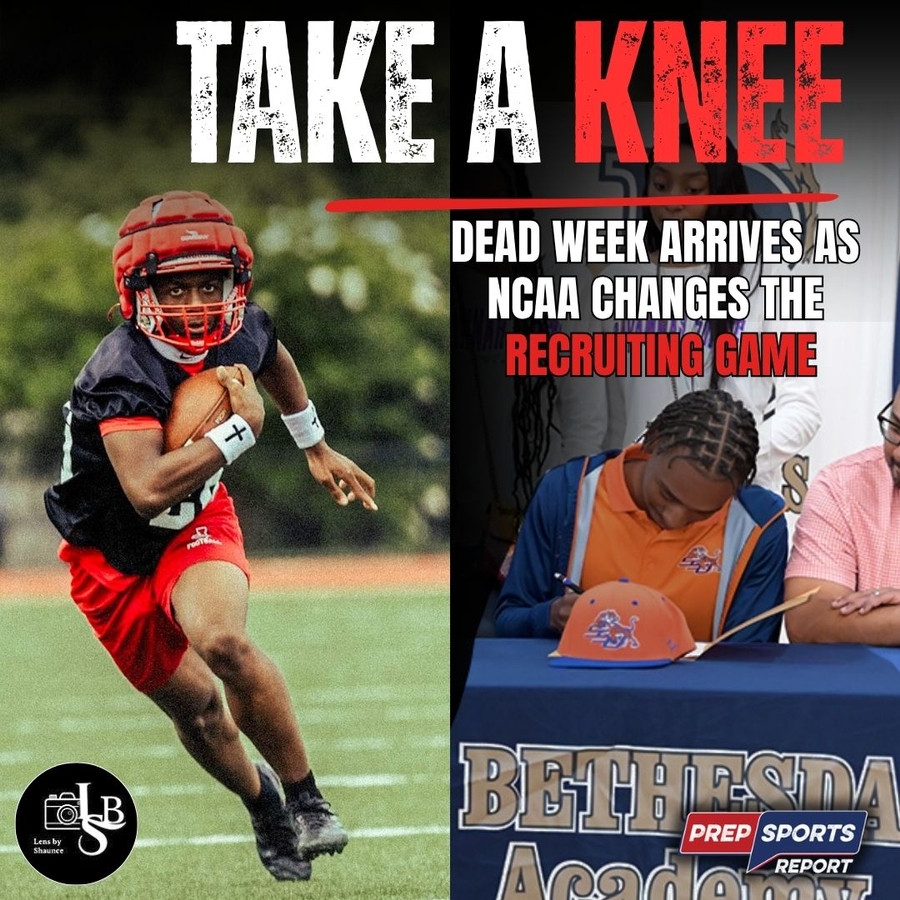
Photos courtesy lensbyshaunce_
Follow Prep Sports Report on X @PrepSav and Instagram @savannahsportsreport.
To share scores, story ideas, or corrections, email kdemasi@prepsportsreport.com or text 912.507.9158.
Prep Sports Report sports coverage presented by Optim Orthopedics
Optim Orthopedics wants you in the game.
Keeping Savannah-area athletes healthy and ready for gameday all season long.
Team physicians include Dr. Don Aaron (Bryan County), Dr. David Sedory (Benedictine, Bradwell Institute, Liberty County), Dr. David Palmer (Calvary Day, Richmond Hill, South Effingham), and Dr. Thomas Alexander (Savannah Country Day, St. Vincent’s Academy).