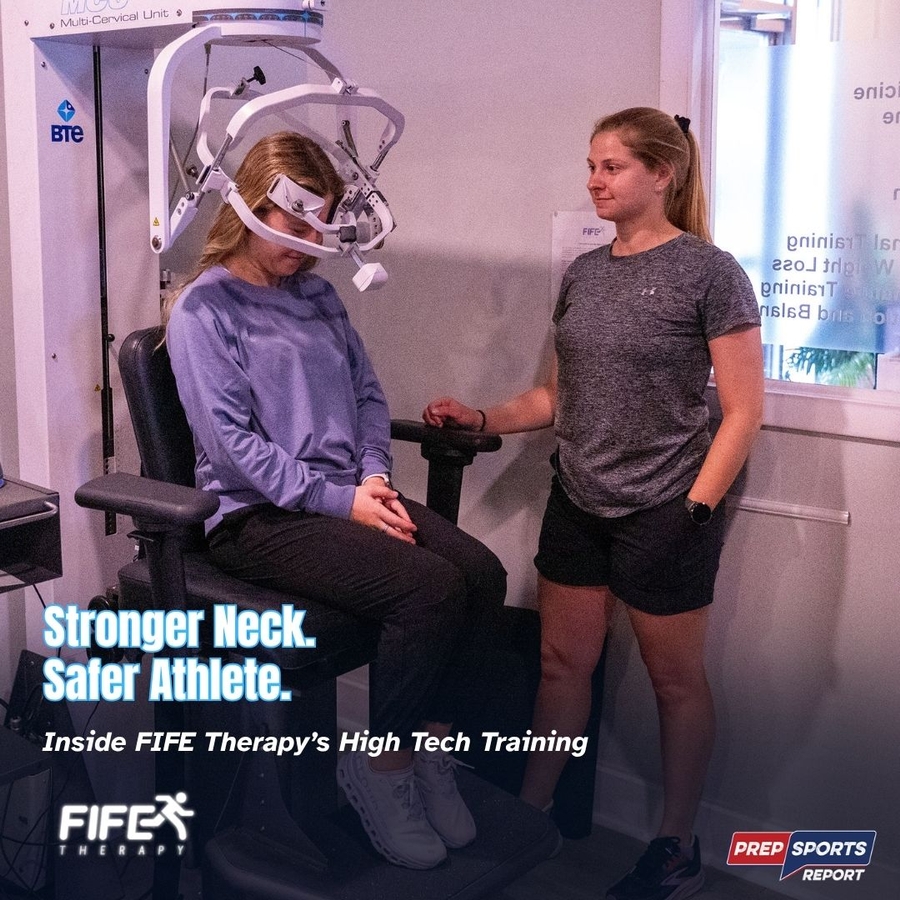
Ongoing physical neck pain is uncomfortable, exasperating, one could say, a real pain in the neck.
Savannah physical therapist Dr. Stuart Fife says it’s important when treating the 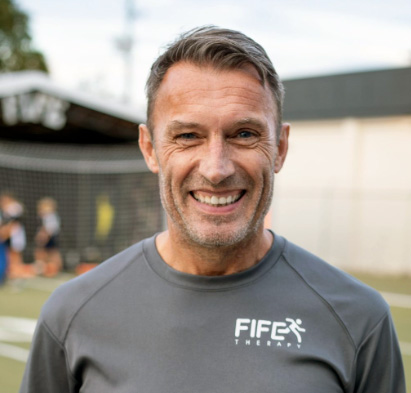 neck, like other body parts, to examine the range of motion and strength as well as decrease pain.
Fife Therapy, a longtime supporter of local athletics and a sponsor of Prep Sports Report since 2020, continues to bring high-level, sports-specific training technology to athletes across the Coastal Empire.
“In the neck, we neglect the strength,” Fife said. “We focus mainly on range of motion and pain. But quite clearly, anybody with ongoing neck pain, anybody who’s had whiplash, any kind of concussion, any kind of motor vehicle accident, there’s a very, very high chance that they simply have a weak neck.”
Sufferers will turn to surgery, massage, acupuncture, dry needling, injections, chiropractic, and other treatments, he said.
“They’ll continue to search for solutions, where the solution often is just getting the neck strong,” he said.
That’s where the Multi-Cervical Unit comes in. The MCU is a computerized machine designed to fully evaluate, test, and strengthen the neck. For the past year, Fife Therapy on Mall Terrace has been the only one in Southeast Georgia, he said.
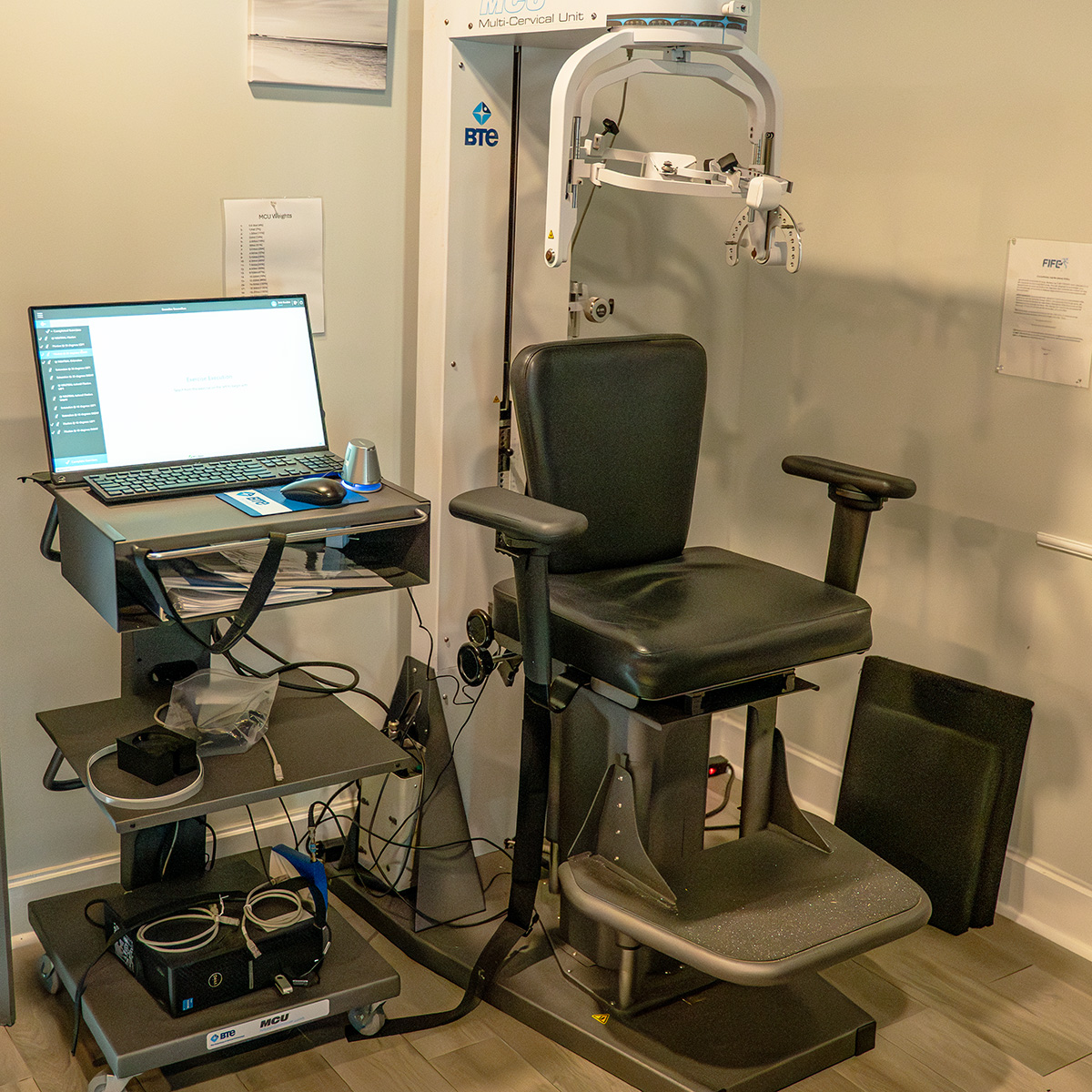
The Multi-Cervical Unit at Fife Therapy in Savannah is a computerized system used to evaluate and strengthen neck muscles. (Courtesy of Prep Sports Report)
A patient is first evaluated by sitting in the MCU, and data is gathered on range of motion and strength or weakness.
“Imagine a clock,” Fife said. “So we’re going to test 12 o’clock, 1, 2, 3. We go all around the clockface on the strength and we find out what deficits the patient may have. We also compare that to normative data.”
After a patient profile and a cervical spine rehabilitation plan are created, progress is measured objectively and incrementally over probably two sessions a week, for as many weeks as needed.
“It’s very scientific. It’s very black and white,” Fife said of the high-tech measurement and tracking, the recorded numbers displayed in real time on graphs on the computer screen.
Patients are weight training for their necks, increasing weight resistance for specific areas, toward reaching the targeted normal strength range. Numbers are broken down to current range, target/normal, below target, on target, above target, and pain rating.
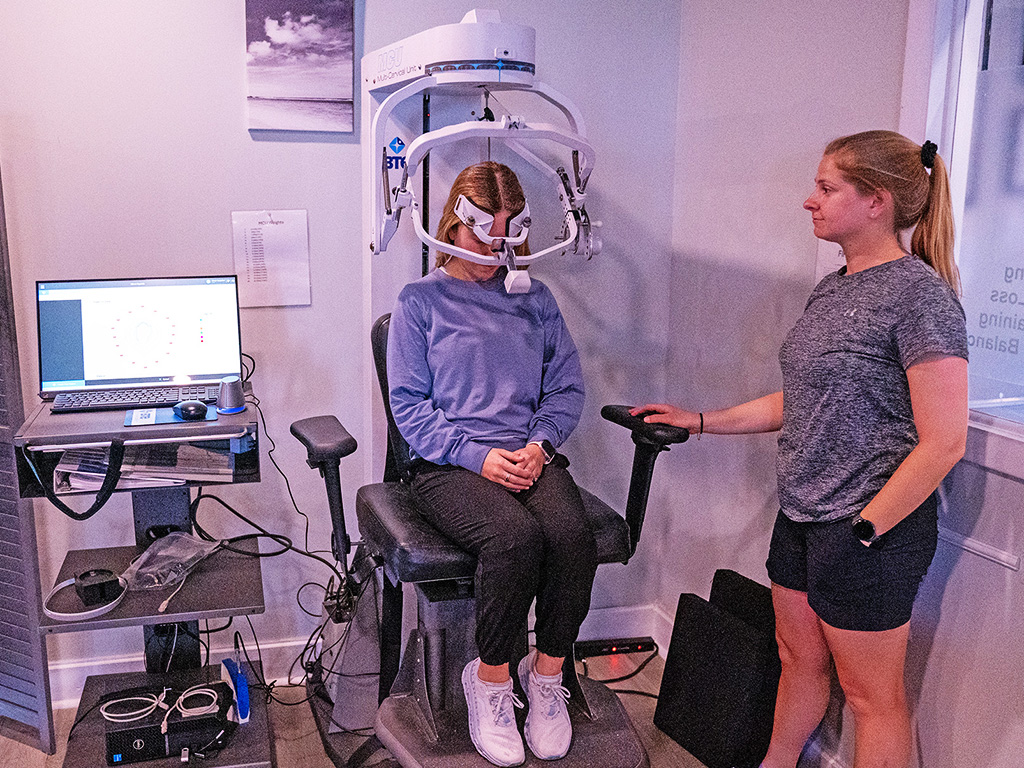
A patient uses the Multi-Cervical Unit at Fife Therapy in Savannah to strengthen neck muscles while a FIFE therapist monitors the session one on one. (Courtesy of Fife Therapy)
Fife reported that about 90 percent of patients at the clinic have improved by using the MCU.
Like any strength-gaining program, it’s hard work. At the beginning, the stack of weights could be very light, perhaps starting at 1 pound, and they get progressively heavier.
“The weight training is very controlled,” Fife said. “Periodically, we’ll go back and do the full test to see has the deficit improved, do we need to work in another direction. So we test, retest, retest, retest until the neck is totally cleaned up all the way around the neck. That there’s 360-degree neck strength will be our desire.”
A lot of patients come to the clinic because of posture-related neck weakness developed over time, not after an incident. They have an education session with the therapist to understand how they’ve overloaded neck tissue and need to change their behavior and stick with it to get rid of the pain.
“You might do the best treatment in the world when the patient’s with you, but if they walk out and leave the clinic, and then apply the same load that they’ve been applying every day, then you can’t get recovery,” Fife said. “The most important thing is changing patients’ awareness but being really thorough about that.”
The data-driven clinic doesn’t base evaluations on how a patient feels on a given day, the answer to which does not measure how well the body is functioning, Fife said.
“We can bring an athlete in and test him,” he said as an example. “If he tests strong, we’re done. … We’re going to test you and you either need us or don’t need us.”
The clinic, which opened in January 2016 and has been in its current location since January 2021, is able to provide preventive care. Fife understands costs can be prohibitive for patients, even with medical insurance.
“Payers won’t pay for preventive care; that’s a shame,” Fife said of patients footing the bill. “Unfortunately with physical therapy, we deal with patients after the fact, after the surgery, after the fall, after the ACL gets torn or blown.”
He would love for people, especially athletes, to be proactive and use the available technology to get tested for deficits in neck strength.
A stronger neck is beneficial to female soccer players in terms of sports performance, Fife said as one example, because they can produce more power to head the ball.
From a safety aspect, improved neck strength has been correlated to reductions in concussions for female soccer players, he said. Decelerating the rotation of the head is key.
“If you’re going to get any kind of blow to the head, the stronger the neck, the better you absorb the speed of the rotation of the hit,” Fife said. “There’ s evidence to say that the speed of the rotation may well be linked to most serious concussions.”
A native of England and soccer enthusiast who plays in an adult recreation league, Fife, 62, makes an argument for prioritizing one’s health.
“Athletes now are spending 280 bucks on a pair of cleats,” Fife said. “You could spend 100 bucks and have a very thorough evaluation of your risk. But it’s hard for people to invest in preventative care. We wish they would.”
Fife has estimated that his company has about $350,000 worth of technology equipment, which he considers money well spent to raise its standard, and as a commitment to the community. The clinic also offers fitness, wellness/personal training, sports performance, and sports visual performance training among its programs.
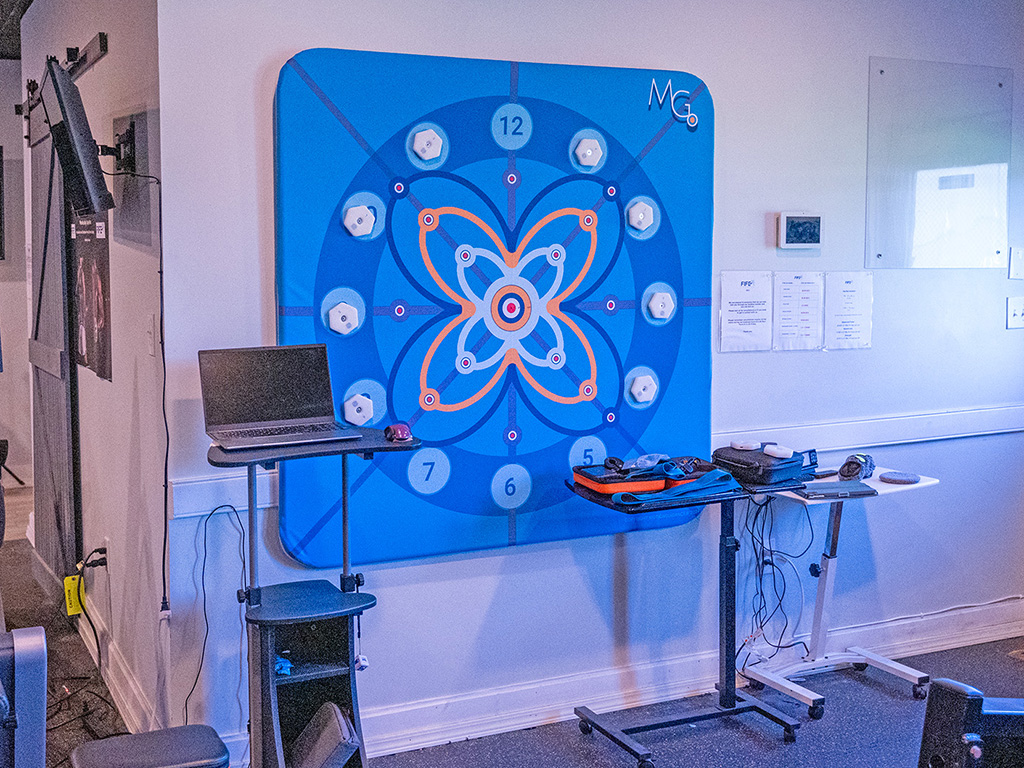
Reaction/visual training board
An interactive visual and reaction training system at Fife Therapy in Savannah helps athletes improve hand-eye coordination, reaction time, and cognitive processing as part of overall performance development. (Courtesy of Prep Sports Report)
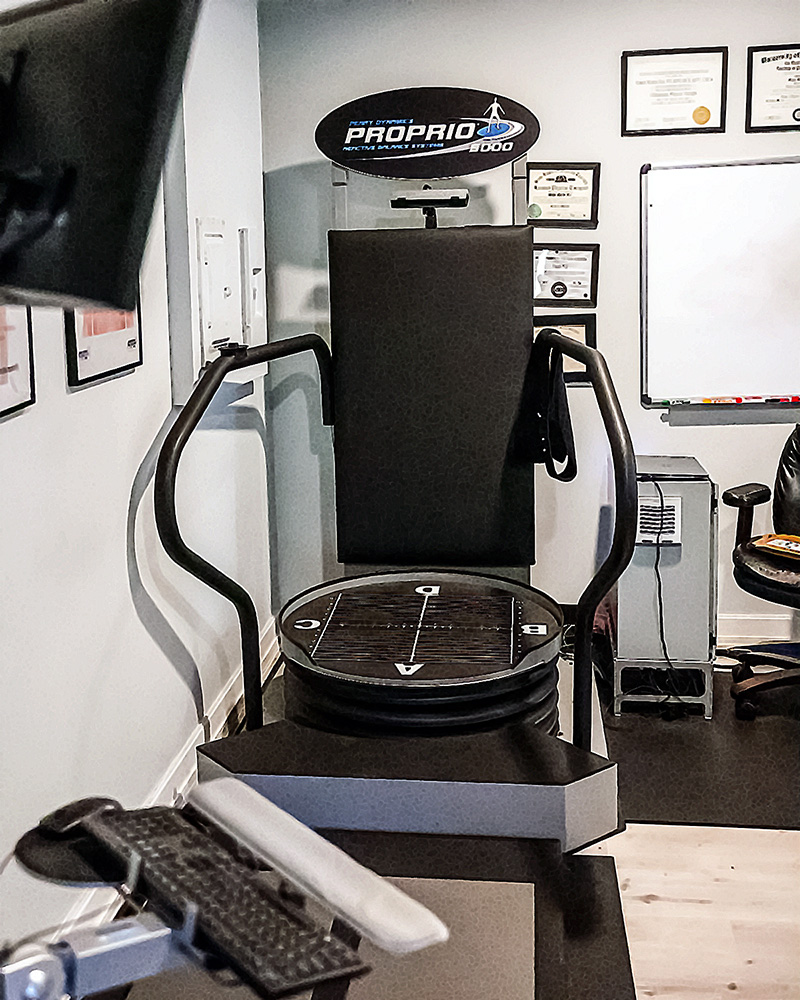
Proprio 5000 Reactive Balance System
The Proprio 5000 at Fife Therapy in Savannah is used to improve balance, stability, and neuromuscular control as part of a data-driven approach to injury prevention and performance training. (Courtesy of Prep Sports Report)
For more information about Fife Therapy, visit the website at www.fifetherapy.com or call during business hours at 912-239-6140.
Rankings compiled from Scoreboard.com Coaches Soccer Polls and MaxPreps.com.
Photo credit: Courtesy of Prep Sports Report
Follow the Prep Sports Report on X @PrepSav and Instagram @savannahsportsreport.
To share scores, stories, or corrections, email kdemasi@prepsportsreport.com or text 912-507-9158.